Diploma in Laparoscopic Surgery (DMAS): Complete Training Guide for Surgeons
Surgical training doesn’t stop at learning instruments or memorizing steps. The real shift happens when a surgeon starts performing procedures with clarity and control. The Diploma in laparoscopic surgery (DMAS) is designed for exactly that transition. It helps bridge the gap between basic knowledge and real operating room confidence in minimally invasive surgery.
What is the Diploma in laparoscopic surgery (DMAS)?
The Diploma in laparoscopic surgery (DMAS) is a structured clinical training program focused on developing practical laparoscopic skills. It combines theoretical learning with hands-on exposure to surgical techniques used in modern minimally invasive procedures.
Unlike short workshops that only introduce concepts, DMAS programs go deeper. Trainees work through progressive modules, starting from instrument handling and moving toward complete procedural understanding. The goal is simple: build surgeons who can operate with precision, not hesitation.
In many institutes, the Diploma in laparoscopic surgery (DMAS) is considered a step up from basic exposure programs and a foundation for advanced fellowships.
Why DMAS matters in modern surgical practice
Hospitals today operate differently compared to even a decade ago. Patients expect smaller incisions, faster recovery, and fewer complications. That expectation has pushed laparoscopic surgery from a specialized skill to a standard requirement.
A Diploma in laparoscopic surgery (DMAS) gives surgeons the ability to meet that demand. It focuses on real-world application rather than theory-heavy learning. That difference becomes obvious when a trained surgeon enters the operating room and already understands workflow, ergonomics, and instrument coordination.
There’s also a career angle. Many surgical roles now list laparoscopic competence as a preferred or required skill. DMAS helps fill that gap in a structured way.
What do you learn during DMAS training?
The learning process in DMAS programs is gradual. It starts with fundamentals and builds toward controlled surgical execution.
Trainees begin with laparoscopic instrument handling and camera navigation. These may sound basic, but they form the backbone of every procedure. Without control over these elements, advanced techniques become difficult to manage.
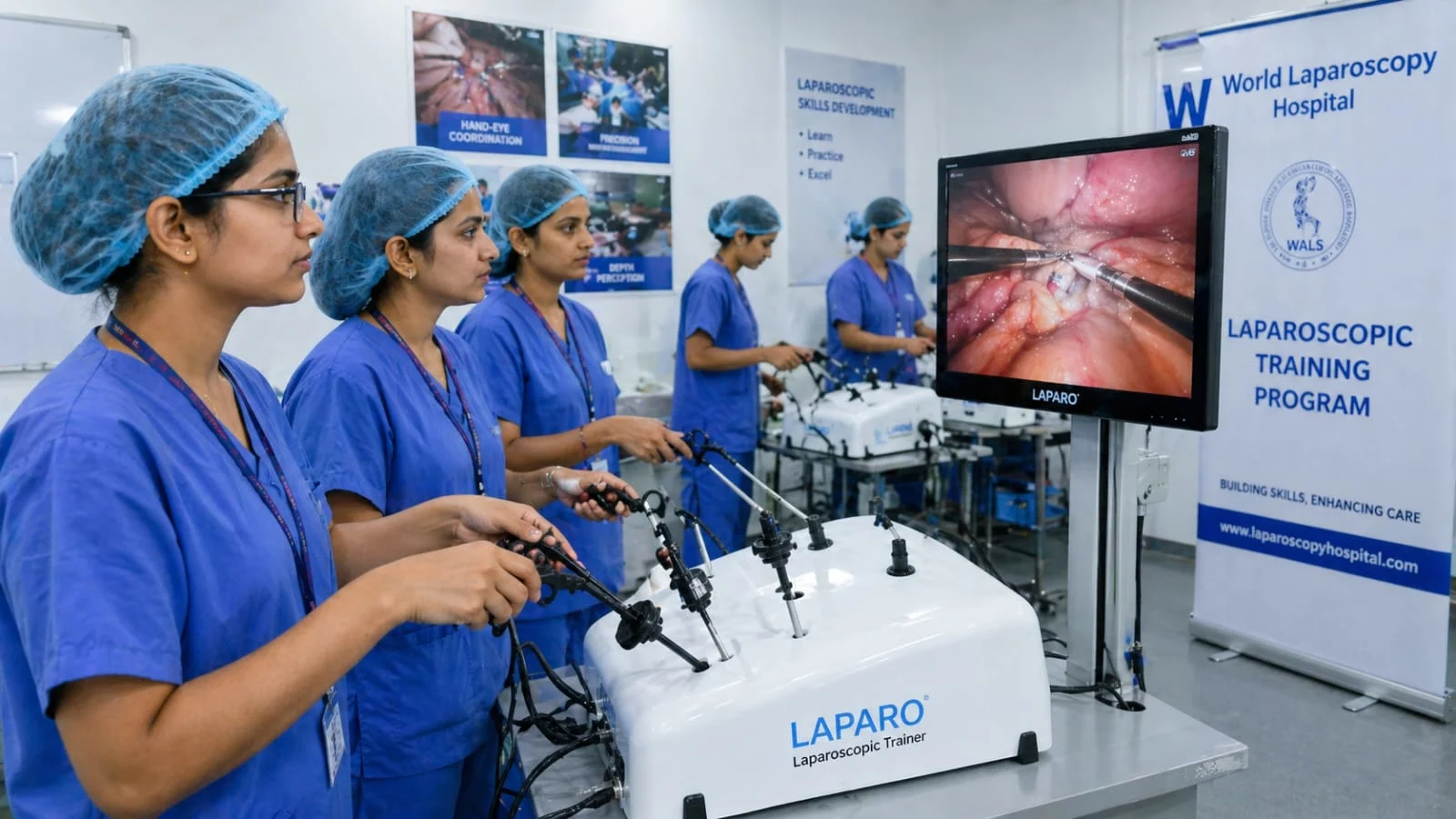
As training progresses, hands-on laparoscopic training becomes central. Surgeons practice on simulation setups, refining movements until they become natural. Coordination improves slowly but steadily.
One of the most challenging areas is intracorporeal suturing training. At first, it feels awkward. Depth perception takes time to adjust. But repeated practice under supervision turns difficulty into familiarity.
Role of practical laparoscopic workshops in DMAS
Theory alone cannot prepare a surgeon for real procedures. That’s where practical laparoscopic workshops become essential.
These workshops simulate real surgical conditions. Trainees repeat procedures, make mistakes, and correct them immediately. The learning is active, not passive.
Live surgical training programs often complement these workshops. Watching real surgeries while understanding each decision made by the operating surgeon helps connect theory with reality. It changes how trainees think about surgical planning.
Over time, confidence builds quietly. Not through lectures, but through repetition.
How simulation training improves DMAS outcomes
Simulation has become one of the strongest pillars of laparoscopic education. It allows controlled practice without patient risk, which is critical for early-stage learning.
Laparoscopic simulation training uses tools like box trainers and VR simulation systems. These tools recreate surgical environments with surprising accuracy. Trainees can repeat tasks as many times as needed.
This repetition builds muscle memory. Movements become smoother. Decision-making becomes faster. Mistakes become learning points instead of setbacks.
In many DMAS programs, simulation is not optional. It is part of the core structure.
Advanced laparoscopic skills developed through DMAS
A Diploma in laparoscopic surgery (DMAS) is not just about basic exposure. It gradually builds advanced capabilities that are essential in real surgical practice.
Surgeons learn how to manage complex instrument coordination. They also develop better spatial awareness inside the abdominal cavity, which is critical in minimally invasive procedures.
As training continues, focus shifts from simple tasks to complete procedural flow. That includes pre-operative preparation, intraoperative decision-making, and post-operative understanding.
These skills don’t develop overnight. They form through structured repetition and guided correction.
Who should enroll in DMAS?
DMAS is suitable for medical professionals who want to move beyond basic surgical exposure. Many early-career surgeons use it as a stepping stone into laparoscopic practice.
General surgeons often enroll to expand their procedural range. Gynecologists also benefit significantly, especially in procedures involving minimally invasive techniques.
Even experienced doctors sometimes choose DMAS to refine their laparoscopic skills and align with modern surgical standards.
The common factor is intent: a willingness to move from observation to actual performance.
Career impact of Diploma in laparoscopic surgery (DMAS)
Completing a Diploma in laparoscopic surgery (DMAS) often changes how surgeons are viewed professionally. It signals structured training in minimally invasive techniques, which are increasingly required in modern healthcare settings.
Hospitals tend to trust surgeons who have undergone formal practical training. That trust translates into more surgical opportunities and greater responsibility in operating rooms.
Patients also indirectly benefit. Better-trained surgeons tend to deliver more consistent outcomes, which improves recovery experiences and reduces complications.
Over time, DMAS becomes more than a certificate. It becomes part of professional identity.
Data Table: DMAS Training Breakdown
| Feature | DMAS Program | Basic Training Course | Advanced Fellowship |
|---|---|---|---|
| Practical Exposure | High | Low | Very High |
| Simulation Training | Included | Limited | Advanced |
| Surgical Confidence Building | Structured | Minimal | Intensive |
| Course Duration | Medium | Short | Long |
| Career Impact | Strong | Limited | Very Strong |
FAQ Section
What is Diploma in laparoscopic surgery (DMAS)?
DMAS is a structured surgical training program that focuses on laparoscopic techniques. It combines theoretical knowledge with practical training, helping surgeons develop real operating skills in minimally invasive procedures through guided practice and simulation.
How long is DMAS course?
The duration of DMAS varies depending on the institute, but it typically ranges from a few weeks to a few months. The timeline depends on how much practical exposure and simulation training is included in the program structure.
Is DMAS suitable for beginners?
Yes, DMAS is suitable for beginners with a medical background. The program starts with basic laparoscopic concepts and gradually progresses toward advanced surgical techniques, making it accessible for trainees at different skill levels.
What skills are taught in DMAS?
DMAS focuses on laparoscopic instrument handling, camera navigation, suturing, knot tying, and procedural workflow. It also includes simulation training and exposure to real surgical environments to build practical competence.
Does DMAS include hands-on training?
Yes, hands-on laparoscopic training is a core part of DMAS. Trainees practice on simulation systems and guided setups to develop real surgical skills instead of relying only on theoretical learning.
What is the difference between FMAS and DMAS?
FMAS is generally considered a fellowship-level introduction to minimal access surgery, while DMAS is a diploma program that often provides more structured and extended training. Both focus on laparoscopic skills but differ in depth and progression.
Is simulation used in DMAS training?
Yes, laparoscopic simulation training is widely used in DMAS programs. It helps trainees practice surgical techniques safely and repeatedly before moving on to real procedures.
Can DMAS improve surgical career opportunities?
Yes, DMAS can significantly improve career opportunities by adding verified laparoscopic skills to a surgeon’s profile. Many hospitals prefer candidates with structured hands-on training in minimally invasive surgery.
Do DMAS programs include live surgeries?
Many DMAS programs include live surgical training components where trainees observe or assist in real procedures. This helps connect theoretical knowledge with real-world surgical practice.
Why should surgeons choose DMAS?
Surgeons choose DMAS to gain structured, hands-on experience in laparoscopic surgery. It helps build confidence, improve technical skills, and prepare for modern surgical demands in hospitals and clinical environments.
Conclusion
A strong surgical foundation is built through structured learning and repeated practice. The Diploma in laparoscopic surgery (DMAS) provides that structure for surgeons aiming to step into minimally invasive techniques with confidence. Over time, it shapes not just skill, but surgical thinking itself.